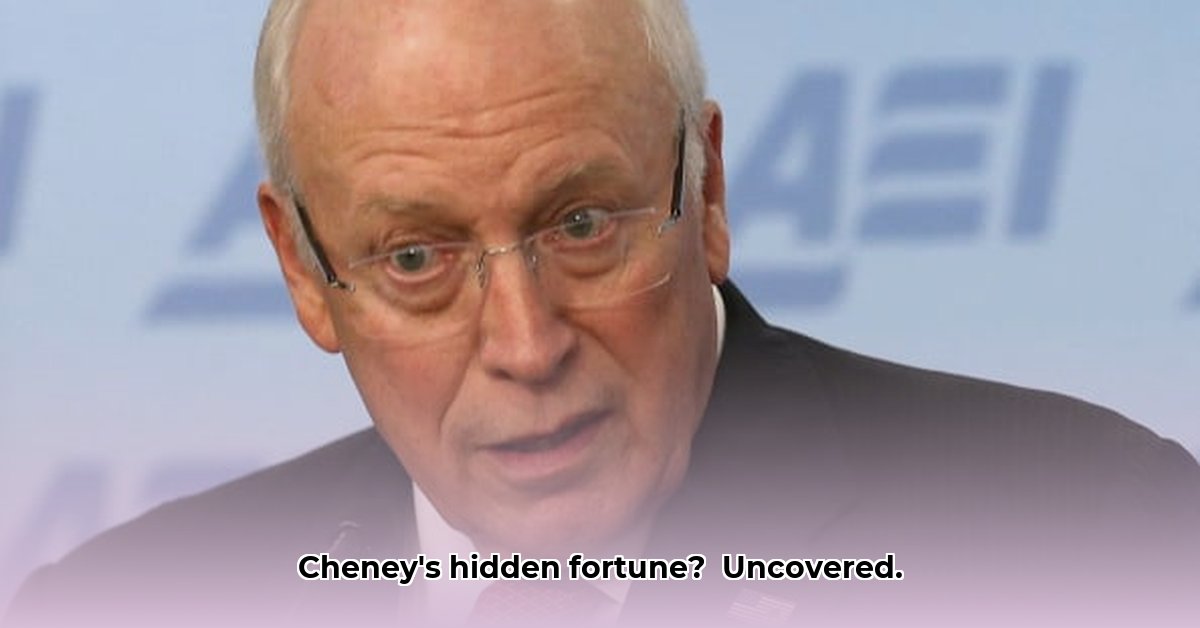
Richard Cheney's career has been marked by both immense power and considerable wealth. While his official government salaries are public knowledge, the full extent of his net worth remains shrouded in partial transparency. This investigation explores the multifaceted nature of his financial success, examining his career trajectory from his Wyoming roots to his time as Vice President and beyond. We will analyze the key phases of his professional life, considering potential conflicts of interest and the ethical implications of his wealth accumulation.
From Wyoming to Washington: Cheney's Early Career
Richard Cheney's early life in Wyoming laid the foundation for his future ascent. His early career, while not exceptionally lucrative, provided him with crucial political experience and connections. Starting with more modest beginnings than many associate with his later prominence, he gradually climbed the political ladder, a path that arguably foreshadowed his future financial success. The extent to which his early experiences directly contributed to his later wealth remains a subject of speculation, requiring deeper investigation into his early financial records and activities.
Halliburton: A Crucible of Controversy and Wealth
Cheney's tenure as CEO of Halliburton, a major oil services corporation, is a pivotal point in analyzing his financial trajectory. During his leadership, Halliburton experienced significant expansion and diversification, particularly into the defense contracting sector. This period saw a substantial increase in his personal wealth, primarily through stock options and salary. However, it also generated significant controversy. Critics have pointed to potential conflicts of interest between his role at Halliburton and his subsequent political career, specifically focusing on Halliburton’s lucrative post 9/11 contracts awarded during his time as Vice President. Did his position at Halliburton provide a launchpad for future financial success that later intersected with his political career in ways that remain a subject of intense debate?
The Vice Presidency: Power, Influence, and Financial Implications
Cheney's eight years as Vice President under President George W. Bush undeniably contributed to his overall net worth, although quantifying the extent of this contribution presents challenges. While his Vice Presidential salary is a matter of public record, the potential for indirect financial gains remains a contentious point. Did his position provide opportunities for post-government employment, such as lucrative consulting contracts or speaking engagements? Establishing a definitive link between his Vice Presidency and his financial success remains a complex undertaking due to the lack of detailed financial disclosures.
Post-Political Life: Accumulating Wealth Beyond Public Service
After leaving the White House, Cheney continued to amass wealth through a variety of lucrative endeavors. Speaking engagements, consulting roles, and book deals have all contributed to his post-political financial success. This raises important questions about the ethical implications of leveraging political experience and connections for personal financial gain. How does his post-political wealth relate to his time in office? This poses a critical question regarding the potential for conflicts of interest and the need for greater transparency in the financial affairs of high-level government officials.
Estimating Cheney's Net Worth: Challenges and Interpretations
Precisely determining Richard Cheney's net worth is difficult due to the limited public accessibility of his financial records. Various estimates place his net worth well above $100 million, primarily based on available public records, inferences from his known activities, and comparisons with individuals of similar background and political influence. However, the lack of complete transparency makes any estimate largely speculative. Further research and analysis might help achieve a more precise assessment. While the exact figure remains elusive, the magnitude of his wealth is undeniable.
Conclusion: A Legacy of Wealth and Unanswered Questions
Richard Cheney's career and financial success are inextricably linked, generating ongoing debate about the ethics of wealth accumulation within the public service. His story underscores the complexities of disentangling political influence from financial gain, particularly in the absence of complete transparency. Addressing these kinds of ethical questions requires greater disclosure and regulation to ensure that those entrusted with the immense power of public office do not unjustly benefit from their positions. Further investigation and a greater willingness to reveal financial details can help clarify the ambiguous legacy left by Richard Cheney and inform future ethical guidelines in politics and government.